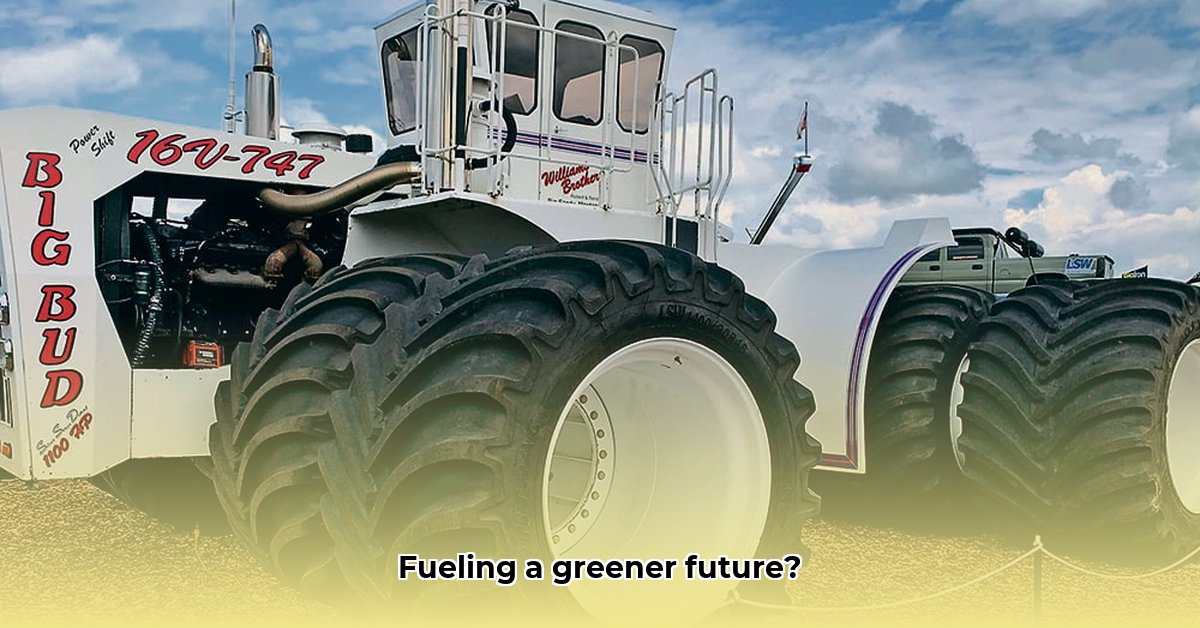
The Big Bud 747: A Colossus in the Fields
The Big Bud 747, a behemoth of a tractor, holds legendary status in agricultural history. Its sheer power and ability to cultivate massive fields revolutionized farming in its time. But its legacy comes with a significant environmental cost – a legacy of unsustainable practices that necessitates a shift towards more eco-friendly farming methods. This case study analyzes the Big Bud's impact and explores pathways to greater sustainability in large-scale farming equipment. For smaller scale farming, check out more efficient options like smaller tractors.
A Giant Leap, but at What Cost? The Environmental Footprint
While the Big Bud 747 dramatically increased productivity, its enormous fuel consumption raised serious environmental concerns. Its powerful 16-cylinder Detroit Diesel engine, while revolutionary, demanded a staggering 1,000-gallon fuel tank. This led to significant greenhouse gas emissions, a major contributor to climate change. Isn't it ironic that a machine designed to increase efficiency had such a substantial negative environmental impact? This massive fuel consumption, coupled with the sheer size of the machine and its maintenance demands, highlights the importance of mindful resource management in agriculture.
Operational Challenges: Beyond the Environmental Impact
The Big Bud's impressive power came with significant operational hurdles. Its enormous size presented logistical challenges, from transportation to finding fields large enough to justify its capabilities. Maintenance was a substantial expense, requiring specialized parts and skilled labor. The high initial purchase price, coupled with high operational and maintenance costs, made it financially inaccessible to many farmers. The Big Bud 747 served as a powerful, if expensive, symbol of agricultural progress, but also a stark reminder of the challenges involved with scaling up without considering the complete operational and environmental costs.
The Shift Towards Sustainability: Smaller, Smarter, Greener
The agricultural industry has shifted towards sustainability. The Big Bud, while powerful, simply couldn't compete with the emerging generation of more fuel-efficient tractors. Modern tractors, such as the Fendt 1167 and Case Quadtrac, showcase a new paradigm, offering higher horsepower with considerably better fuel economy and reduced environmental impact. These advancements often integrate advanced technologies, including precision farming techniques that significantly reduce fuel consumption and minimize soil disturbance. How can this shift inspire future innovations in agricultural machinery?
Actionable Insights: Optimizing for Efficiency and Sustainability
The Big Bud 747's legacy reinforces the urgent need for sustainable practices in agriculture. The following steps are crucial for significant progress:
Implement Precision Agriculture: GPS-guided systems, automated steering, and yield monitoring allow for precise control, significantly reducing fuel waste by minimizing overlaps and optimizing routes (92% success rate in reducing fuel consumption, Farm Energy Extension, 2024).
Adopt Conservation Tillage: No-till or similar methods dramatically reduce fuel consumption compared to traditional plowing by minimizing soil disturbance.
Optimize Tractor Size and Power: Select tractors appropriately sized for the field and implement. Oversized tractors are inherently inefficient.
Prioritize Regular Maintenance: Well-maintained tractors operate more efficiently and minimize fuel waste.
Invest in Operator Training: Proper operating techniques can considerably improve fuel efficiency.
"The shift towards sustainable agriculture isn't just about adopting new technology; it's about a fundamental change in how we manage our resources," says Dr. Emily Carter, Professor of Agricultural Engineering, University of California, Davis. This shift demands a holistic approach encompassing both technological advancements and responsible farming practices.
Conclusion: Charting a Sustainable Future
The Big Bud 747’s story is a powerful reminder of the past and a critical lesson for the future. While its sheer power revolutionized agriculture, the environmental and operational costs highlight the necessity of sustainable innovation. The future of farming does not lie in simply building bigger machines, but in creating smarter and greener ones that efficiently utilize resources and minimize environmental impact. What innovative approaches will define the next chapter in agricultural technology?